Successful Student Conference

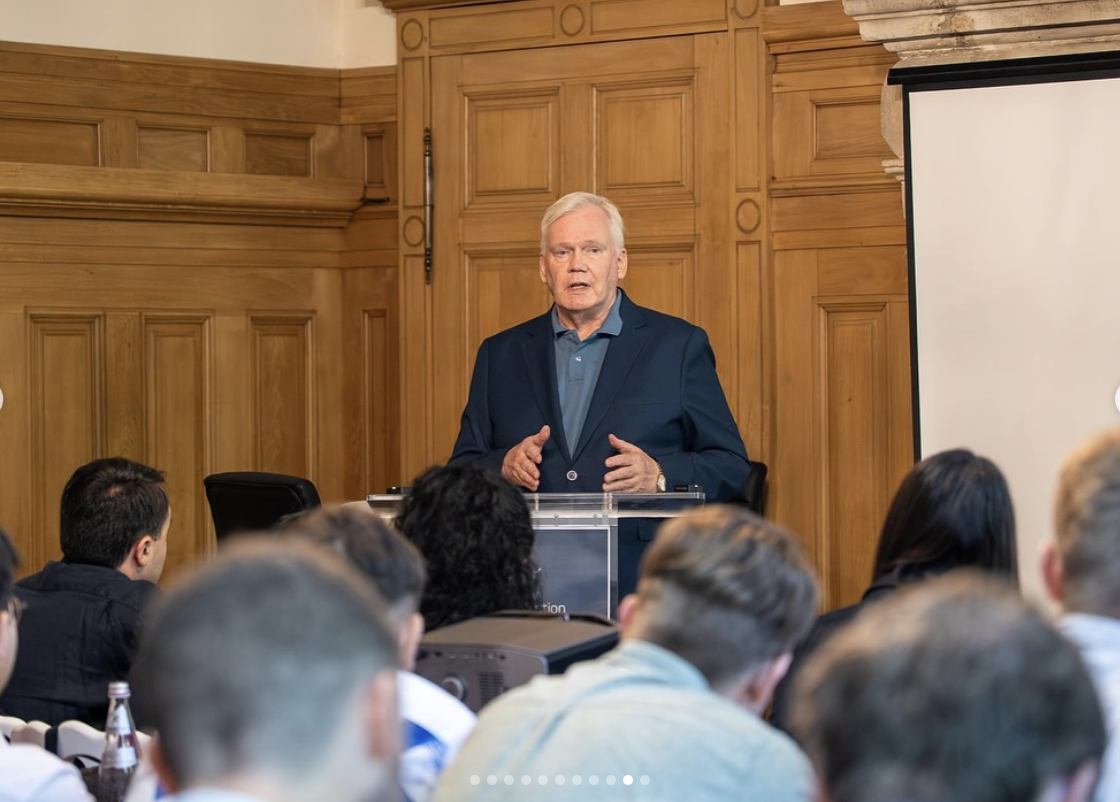
Students for Liberty Europe, Nordic Students for Liberty, RSE, the Icelandic Research Centre for Social and Economic Affairs, and two student associations on entrepreneurship and innovation at Reykjavik University and the University of Iceland, respectively, held a very successful conference at Reykjavik University Saturday 12 October 2024, between 14 and 18. The theme of the conference was ‘Markets and Entrepreneurship’. The former Olympic champion Anton Sveinn McKee, now Chairman of the Youth Organisation of the Centre Party, was Master of Ceremonies. He welcomed Aslaug Arna Sigurbjornsdottir, Member of Parliament for the Independence Party and Minister of Industry, Universities, and Innovation. She delivered some opening remarks about the importance of innovation and entrepreneurship in an ever-changing world where knowledge seemed to double every day.

The first session was about ‘Challenges to Freedom’. It was chaired by Dilja Mist Einarsdottir, Member of Parliament for the Independence Party. Tahmineh Dehbozorgi gave a moving account of the contrast between her life until she was seventeen in Iran under the iron rule of the mullahs, and now in the United States where she studied law, first in Los Angeles and then in Washington DC. She emphasised that freedom could be lost gradually. We should always ask ourselves when confronted with a measure where it would logically lead in the end. Dr. Kristian Nimietz of the IEA, Institute of Economic Affairs in London, cogently presented the evidence that neither colonialism nor slavery could explain the prosperity of the West. Many colonies made a net loss, and the trade in slavery was only a fraction of total trade from the seventeenth to the nineteenth century. Claims made by the proponents of the recent woke movements about the evils of capitalism were therefore not based on facts.

The second session was about the ‘Promises of Freedom’. It was chaired by popular podcaster Frosti Logason. Ragnar Arnason, Professor Emeritus in Resource Economics at the University of Iceland and an internationally acknowledged expert on fisheries economics, clearly and concisely described ‘Free Market Environmentalism’, a school of thought which began with a 1991 book of the same name by Donald Leal and Terry Anderson. The basis premise of this school of thought is that the definition of private property rights was essential to ensure the efficient utilisation of natural resources. Pollution, for example, was usually because nobody owned and guarded that which was being polluted, such as rivers or lakes. Ely Lassman, the Chairman and Founder of Prometheus on Campus, discussed in an illuminating way the concept of capitalism, as found in writings by its supporters on the one hand and its opponents, such as Noam Chomsky, on the other hand. The truth of the matter was that what was often called capitalism was basically the right of individuals to choose for themselves. It was not based on utility, as some of its supporters had argued, but on individual rights, grounded in human rationality. The defence of capitalism had to be moral, Lassman submitted.

The third session was about ‘Young People and Entrepreneurship’. It was chaired by Haukur Ingi S. Jonsson, a second-year student of financial engineering at Reykjavik University and Chairman of Sproti, the student assocation at the University for innovation and entrepreneurship. The 23-year-old Swedish entrepreneur Ida Johansson impressed the audience with her description of how she five years ago prepared and developed a company, Hyred, which assisted companies in recruiting  the right kind of employees. Singled out in 2022 by Fortune as one of eight up-and-coming entrepreneurs, she recently sold the company and is devoting her time to research and investments. Lovro and Marin Lesic, 20-year-old twin brothers, investors and entrepreneurs from Croatia, gave a lively account of what they have already learned from failures and successes of their various projects: 1) It’s never too early to start. 2) Success can’t be achieved without continuous learning. 3) Early failues fuel future successes.

Dr. Birgir Thor Runolfsson, Chairman of the Faculty of Economics at the University of Iceland, made some concluding remarks, whereupon Anton Sveinn McKee invited the participants to a reception and dinner in the nearby Ceres Room at Bragginn, with a great view of Reykjavik and Kopavogur, the next town. At the dinner, Hannes H. Gissurarson, Professor Emeritus of Politics at the University of Iceland, proposed a toast to the two sponsors of the dinner, Prometheus Foundation and the Icelandic whaling company Hvalur. The restaurant Thrir Frakkar had prepared delicious whalemeat dishes which the participants enjoyed. Gissurarson pointed out that the two whale stocks harvested in the Icelandic waters, the Minke Whale and the Fin Whale, were both plentiful and far from being in any danger of extinction.

Before the conference, on Friday 11 October, Gissurarson had published an article about the theme of the conference and the contributions of some of the speakers:

On 12 October, the only remaining daily in Iceland, Morgunbladid, published an interview with Tahmineh Dehbozorgi about the Iranian dissident movement and life in the United States:

The conference was jointly organised by Breki Atlason, the Students for Liberty representative in Iceland, and Haukur Ingi S. Jonsson. They were ably assisted by Students for Liberty veterans Halla Margret Hilmarsdottir, Lukas Schweiger and Magnus Orn Gunnarsson, and by Viktor Levi Andrason, Gunnar Snaer Mogensen and others. Professor Gissurarson invited the foreign speakers and the domestic organisers to a barbecue at his home the night before the conference.

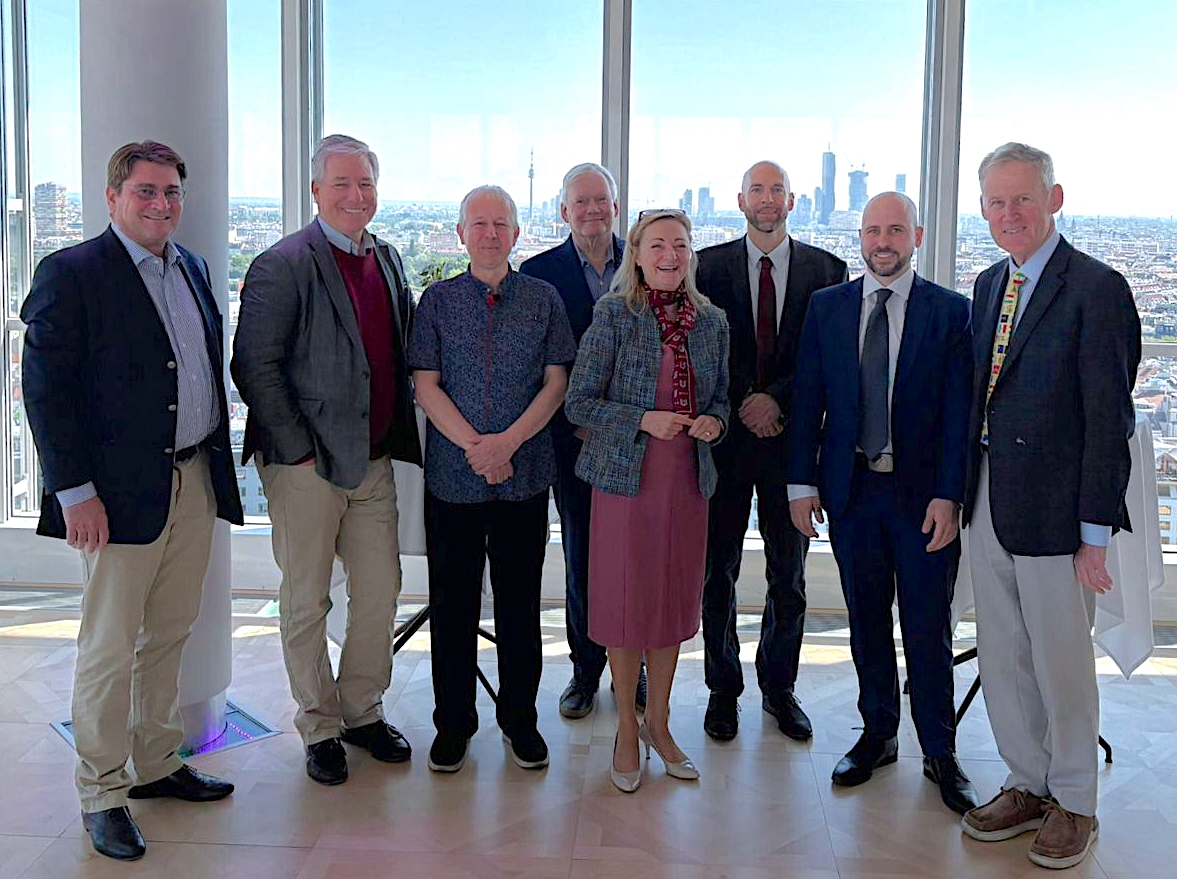
Speakers and organisers, from left: Haukur Ingi S. Jonsson, Ely Lassman, Marin Lesic, Ida Johansson, Kristian Niemietz, Tahmineh Dehbozorgi, Lovro Lesic, Ragnar Arnason, Breki Atlason and Sveinn Anton McKee. Photo: Viktor L. Andrason.

Comments Off

Fish, Wealth, and Welfare

The Faculty of Economics at the University of Iceland and RSE, the Icelandic Research Centre for Social and Economic Affairs, jointly held an international conference about fisheries economics on 8 November 2024. The occasion was the publication by the Public Book Club of a collection of scientific papers by Ragnar Árnason, Professor Emeritus of Fisheries Economics at the University of Iceland, Fish, Wealth, and Welfare.

From left: Birgir Thór Runólfsson, Hannes H. Gissurarson, Árni M. Mathiesen, Trond Bjorndal, Ragnar Árnason, Rögnvaldur Hannesson, Peder Andersen and Gudmundur Kristjánsson.

Comments Off

Runolfsson Member of Mont Pelerin Society

Dr. Birgir Thor Runolfsson, the Chair of the Economics Faculty at the University, was elected member of the Mont Pelerin Society at its biannual general meeting in New Delhi 21–26 September. The other two attendants from Iceland were Ragnar Arnason, Professor Emeritus of Fisheries Economics at the University of Iceland, and Hannes H. Gissurarson, Professor Emeritus of Politics at the University of Iceland. The Mont Pelerin Society is an international academy of (classical) liberal scholars and men of affairs, founded by Friedrich A. von Hayek in Switzerland in April 1947. Founding members included later Nobel Laureates Maurice Allais, Milton Friedman, and George J. Stigler, the well-known economists Frank H. Knight, founder of the Chicago School of economics, and Ludwig von Mises, founder of the Austrian School of economics, the economist Luigi Einaudi, President of Italy in 1948–1955, Dr. Trygve Hoff, Editor of Norwegian business magazine Farmand, and Swedish professors Eli F. Heckscher and Herbert Tingsten. Hannes Gissurarson attended his first meeting of the Society at Stanford in 1980. Becoming a member in 1984, he was on the Board of Directors in 1998–2004 and organised a regional meeting of the Society in Iceland in 2005.

At the New Delhi meeting, Professor Gissurarson made two interventions. In a session on economic policy in India it was described how a domestic elite replace the British raj in 1947, establishing a burdensome bureaucracy and trying to implement unrealistic ideas about central economic planning, while maintaing most formal symbols of democracy. Gissurarson asked whether it would not have been more sensible to hand over power to the existing multitude of territories, some of which had been under British rule, and some of which had been governed by Maharajas and Nawabs, such as Hyderabad and Mysore, forcibly conquered by the elite shortly after the British withdrawal. Possibly then what would have emerged would have been competition between different regimes, instead of the elite imposing on the whole of India ideas tht it had learned from left-wing university teachers in Britain. In a session on the fiftieth anniversary of Hayek’s Nobel Prize in Economics, in 1974, Gissurarson recalled when he was a student at Oxford University in 1983 that Hayek visited him and some of his fellow students. They asked him whether they could use his name and found a Hayek Society at Oxford to discuss the problems and prospects of classical liberalism. ‘Yes, if you promise me not to become Hayekians. I have noticed that the Marxists are much worse than Marx and the Keynesians much worse than Keynes,’ Hayek replied.

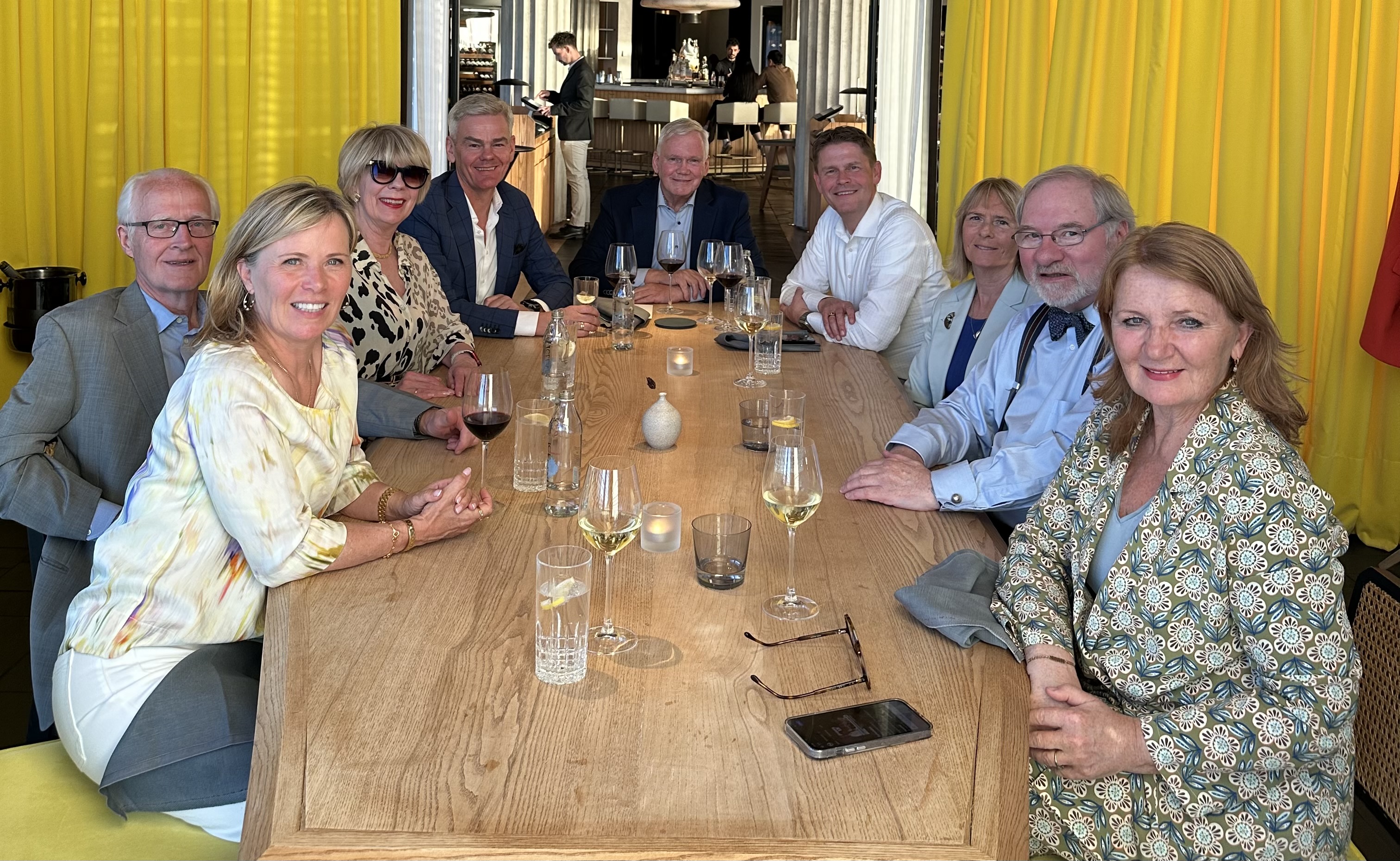
At the Mont Pelerin Society meeting in New Delhi the Nordic participants went together to dinner one night. From left: David Andersson, Sweden and Taiwan, Dr. Kristian Niemietz, London, Prof. Birgir Th. Runolfsson, Iceland, Dr. Lars Peder Nordbakken, Norway, Dr. Nils Karlson, Sweden, Prof. Ragnar Arnason, Prof. Anna Agnarsdottir (wife of Ragnar Arnason), Susanne Enger (wife of Nils Karlson), Sweden, Prof. Hannes H. Gissurarson, Iceland, og Håkan Gergils, Sweden.

Comments Off

Gissurarson: Voters Against the Elite

In Frosti’s studio there is a portrait of Gissurarson’s friend David Oddsson.

Hannes H. Gissurarson, Professor Emeritus of Politics at the University of Iceland, was a guest in Frosti Logason’s podcast on 19 September 2024. He said that recent elections in European countries suggested that a lot of voters who had voted for traditional centre-right parties were now voting for more populist right-wing parties. They refused to accept 1) the unlimited immigration of people from Muslim countries if and when those immigrants rejected Western values; 2) centralisation, the transfer of power from the European nation states to the Brussels bureaucracy; 3) the dominance that intolerant left-wing intellectuals had acquired over mainstream media and the universities, using it to promote wokeism and cancel culture; 4) the extension of free trade to mainland China if and when her communist rulers did not observe the rules of a fair game. European voters were rebelling against the dominant elites. Gissurarson said that the war in Ukraine should be resolved by a ceasefire, followed by free and fair elections in contested regions about whether the inhabitants wanted to belong to Ukraine or Russia, just like the elections in 1920 in Schleswig about whether the inhabitants wanted to belong to Denmark or Germany. The resolution of the conflict in the Middle East was not two states, but rather one sovereign country, Israel, which would however grant communes (or cantons) of Palestinian Arabs within her borders extensive self-government, just like Finland after 1917 granted the Aaland Islands self-government while retaining sovereignty. On the issue of Muslim immigrants and asylum seekers in Europe a distinction had to be made, Gissurarson submitted, between those who were already citizens in a European country and those who were not. Of course, under the rule of law all citizens should enjoy equal rights irrespective of their religion. But if some citizens rejected Western values and became a nuisance and even a threat without violating the law in such a way that they could be deprived of their citizenship, then perhaps they could be paid to stay away, in countries that would have them.

Comments Off

Gissurarson: Grundtvig and the Danish Success Story

RNH Academic Director Hannes H. Gissurarson, Professor Emeritus of Politics at the University of Iceland, was invited to give a talk at a meeting of the Brussels think tank New Direction in Dublin on 17 September 2024. He used the opportunity to compare the ideas of local thinker Edmund Burke to those of three Nordic thinkers, Snorri Sturluson, Anders Chydenius, and N. F. S. Grundtvig. Snorri had in his Heimskringla presented two political principles, government by consent and the right of rebellion. These principles had later been articulated and elaborated by three British writers, John Locke, David Hume, and Adam Smith, who could be regarded as the fathers of classical liberalism, whereas Snorri was a proto-liberal. As a result of the 1789 French Revolution, classical liberalism had split into the radical liberalism of Tom Paine (and later John Stuart Mill) and the conservative liberalism of Edmund Burke (and later Alexis de Tocqueville).

Gissurarson said that the two most influential Nordic liberals of the eighteenth and nineteenth century, the Swedish pastor and politician Anders Chydenius and the Danish pastor and poet N. F. S. Grundtvig, had both been conservative liberals, preferring evolution to revolution, opposing the French Jacobins, but strongly supporting freedom of expression and of religion, private property and economic freedom. Grundtvig had translated Snorri’s Heimskringla into Danish and in his own writings emphasised the Nordic cultural heritage. It was interesting, Gissurarson added, to compare Ireland and Denmark in the nineteenth century because geographical conditions and natural resources were similar in the two of them. One reason why the Danes were more successful than the Irish was that they were a sovereign nation enjoying social cohesion, not least because of Grundtvig’s effort in education. Grundtvig was still relevant, not least his national non-aggressive liberalism. Other speakers at the meeting included an old friend of Iceland, Lord Daniel Hannan of Kingsclere.

Gissurarson Slides in Dublin

Comments Off

Tupy: The More People, the Merrier

The summer of 2022 saw the publication of the book Superabundance; the Story of Population Growth, Innovation, and Human Flourishing on an Infinitely Bountiful Planet by Dr. Marian Tupy of the Cato Institute in Washington DC and Professor Gale Pooley. They present two main theses: 1) Population increase is not bound to be a problem because in a free economy each individual would tend to produce more than he would consume. Natural resources are by no means dwindling. 2) There has been much more progress than is reflected in the usual measurements of economic growth. What is most relevant is the time price of goods, not their money price, where time price maeans the time it takes to work for the goods.

The first thesis is amply confirmed by experience. The dire predictions in The Limits to Growth and A Blueprint for Survival which both were published in Iceland in 1973 turned out to be wrong. Food production has increased at a greater rate than the population. Natural resources have not been dwindling, for two reasons, that new resources have been discovered and that old resources are utilised more efficiently. For example, if a machine is invented that uses only half the energy of its predecessor, then it means that the energy reserves for this kind of production has doubled in size. It is also easy to argue for the second thesis. If a loaf of bread costs 200 Icelandic kronur while its consumer earns 2,000 kronur per hour, then its time price is six minutes. But if the price of the loaf increases to 220 kronur while its consumer earns 2,400 kronur per hour, then the time price has fallen to five minutes and 24 seconds. A good example of astonishing progress which is not well reflected in ordinary statistics is the price of light. In 1800, it cost 5.37 hours for a common worker to buy one hour of light. Now it costs less than 0.18 seconds.

Marian Tupy visited Iceland in July 2024 and gave a talk at the University of Iceland on 24 July, with Hannes H. Gissurarson, Professor Emeritus of Politics at the University, chairing. After his talk, Tupy responded to questions. One question was whether man had really seen moral progress in the twentieth century, given its horrors, Nazi extermination camps such as Auschwitz and Stalinist and Maoist slave camps such as Karaganda. Tupy agreed that certainly there was still much evil in the world, but he pointed out that acts of evil had to be evaluated relative to the population, and then they probably turned out to be less prevalent than in the more distant past.

Comments Off