

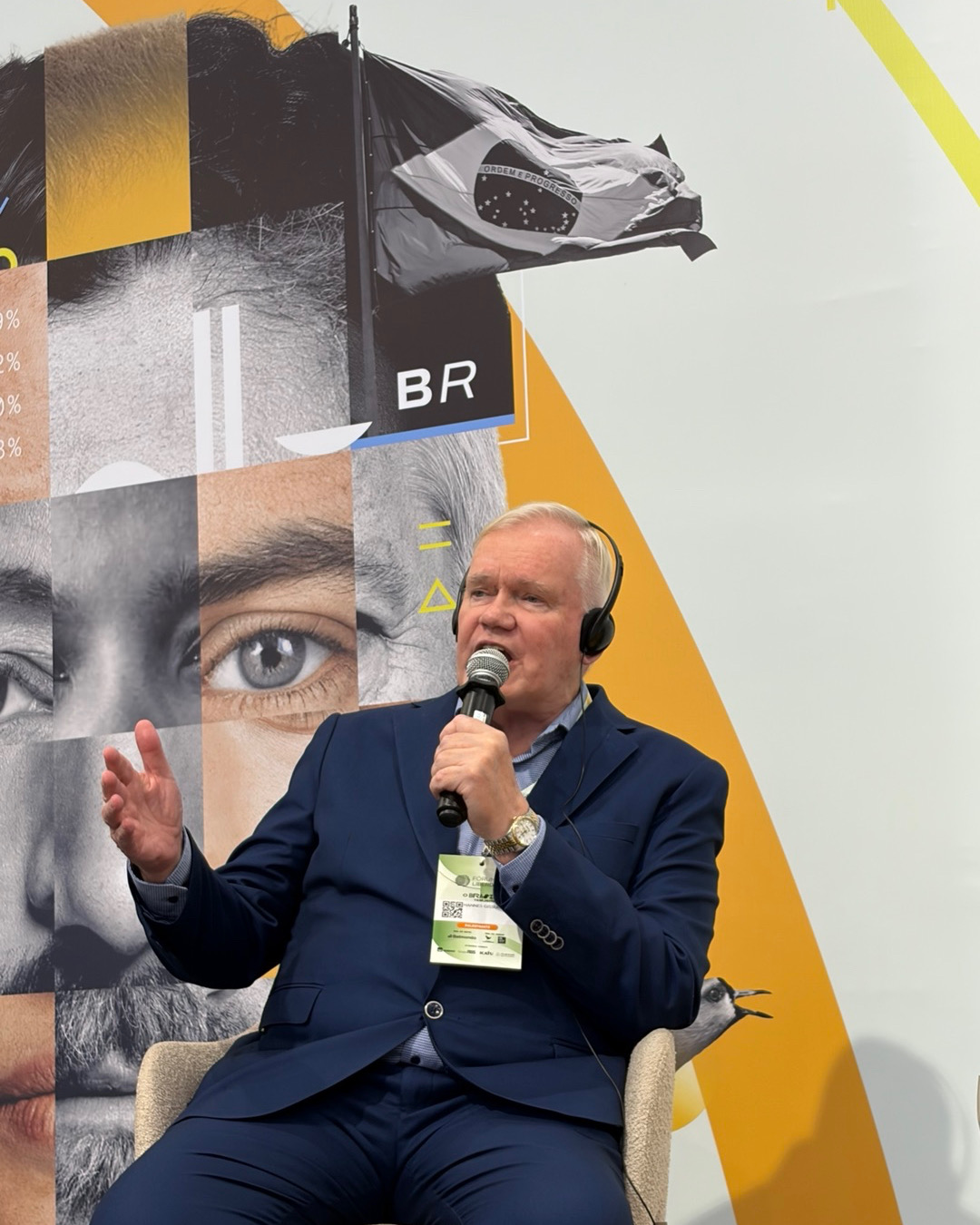
 Brazil’s southernmost state is Rio Grande do Sul, whose capital is Porto Alegre on the South Atlantic Ocean. In the state, young entrepreneurs, investors, and businessmen form an association that annually holds a well-attended conference, Fórum da liberdade (Liberty Forum), where speakers from around the world discuss economic freedom and free enterprise.
At the 2026 Liberty Forum, RNH Academic Director, Hannes H. Gissurarson, Professor Emeritus of Politics at the University of Iceland, presented on 9 April a forthcoming book that he edits and introduces, Conservative-Liberal Thought in the Nordic Countries, 946–1945: An Anthology. It is 468 pages, of which 267 are his introduction. The first selections from the writings of Nordic authors are by the Icelandic chroniclers Ari the Learned and Snorri Sturluson, and the last ones by the Norwegian economist Trygve Hoff and the Danish law professor Poul Andersen. The anthology is published by the Brussels think tank New Direction.
In his talk in Porto Alegre, Hannes Gissurarson said that the success of the Nordic countries was despite, and not because of, social democracy. Its three main explanations were: a strong tradition of the rule of law; a firm commitment to free trade; and social cohesion, reflected in a high level of trust. Hannes also suggested an explanation of the tradition of hard work in the Nordic countries (possibly now being eroded by sloth, made possible by generous welfare benefits). It is that, over the centuries, the Nordic nations had to prepare for and endure harsh winters through hard work, unable to collect low-hanging fruit from trees in milder climates.
