Jan Valtin in Poitiers

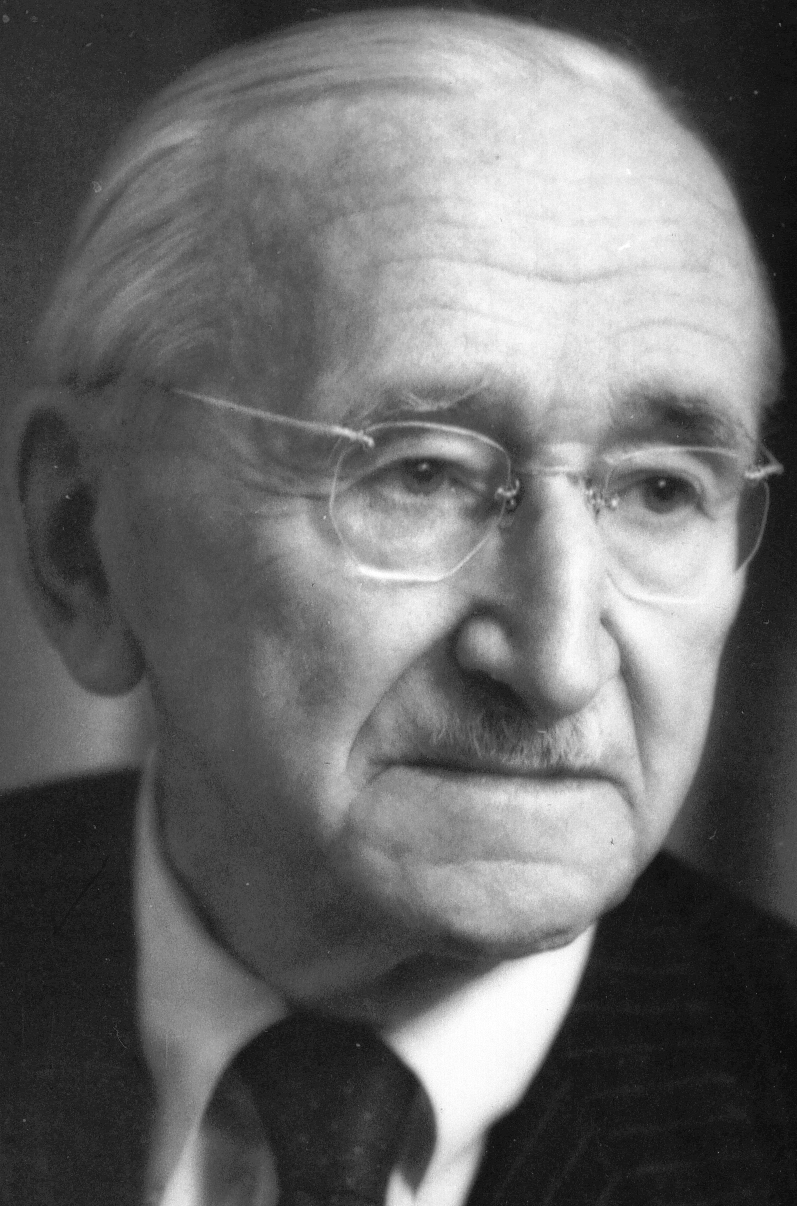
Richard Krebs (Jan Valtin)

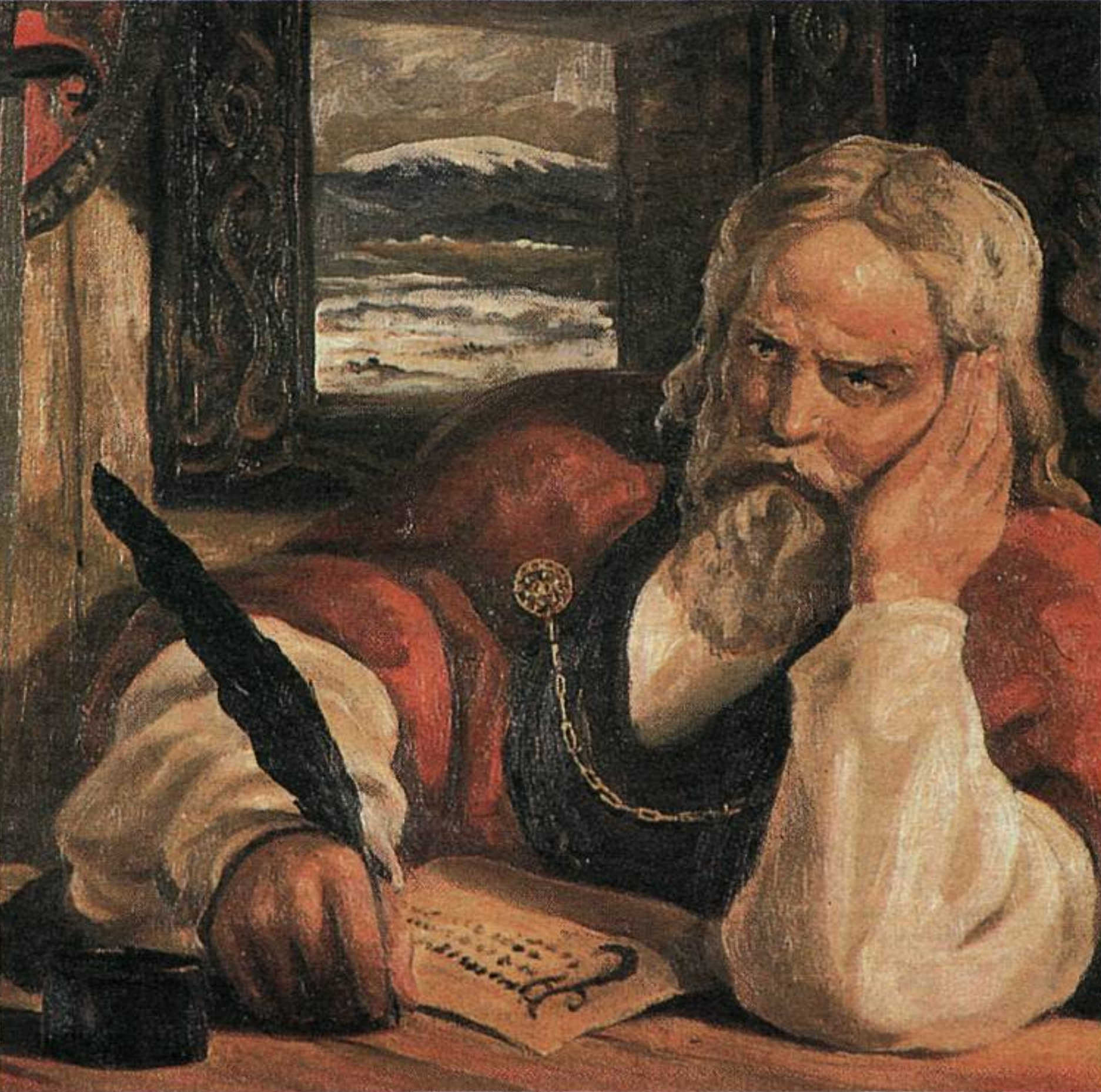
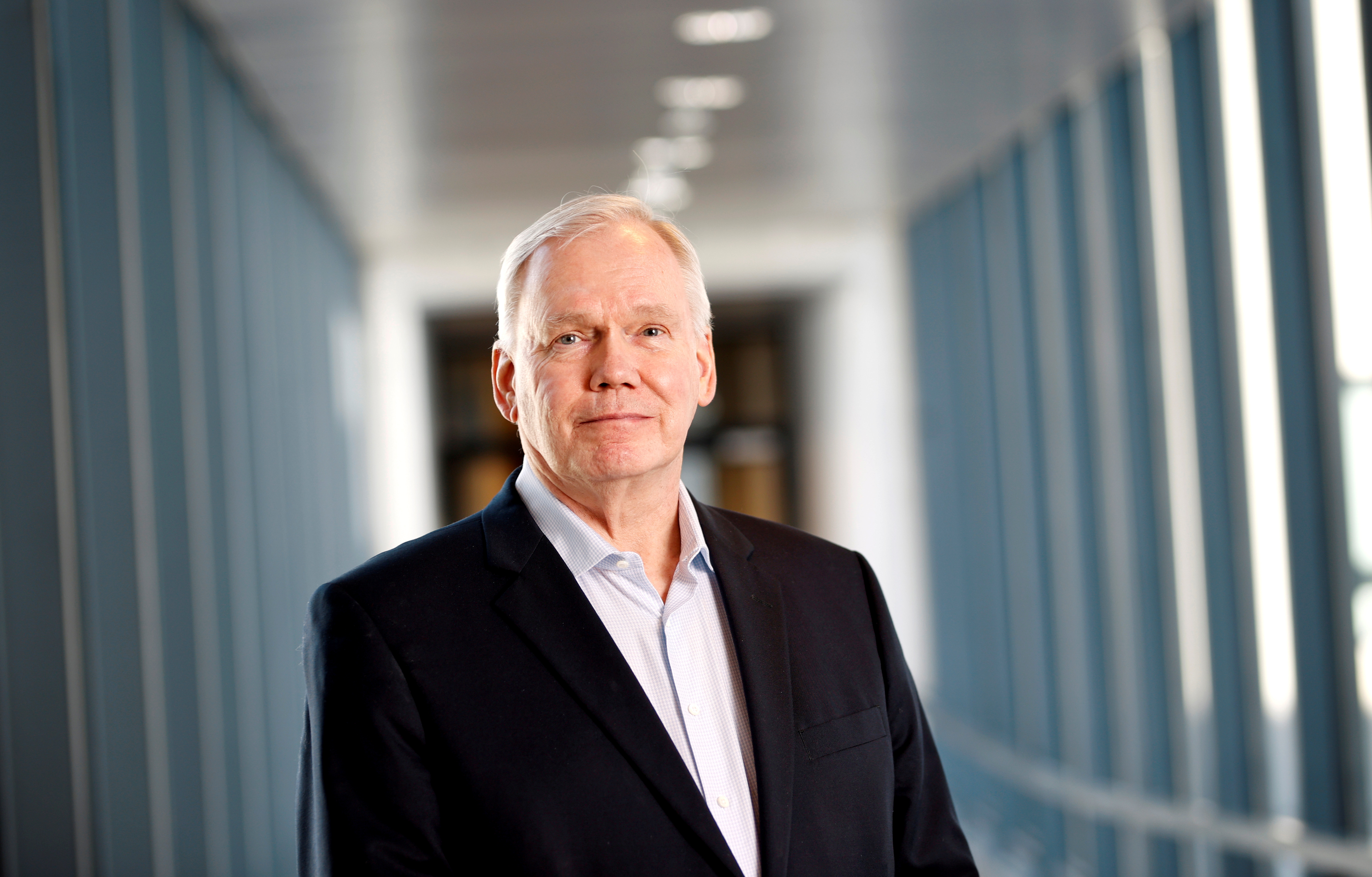
One of the most telling documents on the Twentieth Century is the autobiography of Richard Krebs, writing under the pseudonym Jan Valtin, Out of the Night, published in 1941, RNH Academic Director Hannes H. Gissurarson suggested in a paper at a conference on Valtin in Poitiers 14–15 November 2019. Born in 1905, Krebs had been an agent of the international communist movement and a double agent inside the Gestapo before escaping to the United States in 1938. His autobiography, a best-seller in the United States, was hotly debated in Iceland in the summer and autumn of 1941, even before the first part was translated and published by the Icelandic social democratic book club, selling more than 4,000 copies in the tiny Icelandic book market. Stalinist writer Halldor K. Laxness wrote a vitriolic personal attack on Valtin, while economist Benjamin Eiriksson—whose earlier stay in the Soviet Union for more than a year had deprived him of many illusions—said that the book rang true. By their fierce campaign against the book, the Icelandic communists managed to delay the appearance of its second part until 1944, and then it was published by some individuals and not by the social democratic book club.

Modern research has shown that many of Valtin’s controversial assertions were true, Professor Gissurarson observed, for example about some Icelandic seamen being Comintern couriers and about the Danish labour leader Richard Jensen engaging in clandestine missions for the Comintern. Despite some inaccuracies and exaggerations, Valtin’s book is important for understanding twentieth century totalitarianism, Gissurarson concluded. In 2015, he edited a republication of the Icelandic translation in one volume, available both on paper and online, with an Introducation and Notes.

At the conference Swedish journalist Dennis Renfors discussed Jan Valtin in Sweden and the other two Scandinavian countries. As a Comintern agent, Krebs was being monitored by the security police in all three countries. In 1942, his book was published in Sweden, but out of consideration for Nazi Germany the chapters about his torture by the Gestapo were omitted. German historian Ernst von Waldenfels—who wrote a biography of Krebs in German, recently translated into English—summed up his research about Krebs, arguing that the heroic Jan Valtin of the book and its author, Richard Krebs, were not one and the same person, even if von Waldenfels would not go so far as to say that the book was a novel rather than an autobiography. Dr. Roger Mattson—who is currently writing a biography of Krebs in English—gave an account of the five last years of Krebs’ life, from 1945 to 1950. Professor Guillaume Bourgeois described the main findings about Krebs in the archives of the British secret service and in the dossier of French communist lawyer Joë Nordmann. The British files showed that Krebs had by no means exaggerated his importance as a Comintern agent. Professor Gildas Le Voguer analysed the interrogations of Krebs by the US House Committee on Un-American Activities.

Professor Bourgeois organised the conference which was lively, friendly and informal. Richard Krebs’ son Eric was present with his wife, reading out to the attendees in the evening of 14 November a selection of unpublished letters from his father. Papers delivered at the conference will eventually be published in a book. Gissurarson’s participation in the event formed a part in the joint project of RNH and ACRE, the Alliance of Conservatives and Reformists, on ‘Europe of the Victims’.

Gissurarson Slides in Poitiers 15 November 2019

Mattson, Eric and Suzanne Krebs, Gissurarson, Le Voguer, and von Waldenfels in front of Poitiers City Hall. Photo: Dennis Renfors.

Comments Off

Vienna Conference: Hayek as a Conservative Liberal

Friedrich A. von Hayek’s political position can be characterised as conservative liberalism, Professor Hannes H. Gissurarson argued in a paper at the VIIIth Conference on Austrian Economics (the School of Menger, Böhm-Bawerk, Mises and Hayek) in Vienna 13 November 2019. It is conservative in its awareness of the limitations of individual reason and in its respect for tradition. It is liberal in its acceptance and indeed celebration of a concrete historical reality, the individualistic progressive civilisation of the West, built upon liberty under the law and bringing about human flourishing, not least in the exercise of entrepreneurship. A conservative liberal political tradition combining these elements can be identified to which David Hume, Edmund Burke, Adam Smith and Lord Acton in the United Kingdom belonged, and Alexis de Tocqueville and Carl Menger on the European continent, besides von Hayek.

The strongest theoretical case for this position is provided by Menger and von Hayek, Gissurarson submitted, relying on the insights of Austrian economics. They can be interpreted as asking the ‘Kantian’ question how this progressive civilisation came into being without anyone designing it. The answer lies in spontaneous coordination, not only in the marketplace but also in the whole of society. Through the price mechanism and certain traditions such as money and the rule of law individuals can utilise much more knowledge than each and any of them possesses, while creating new knowledge in an experimental process. The free market order thus produces the mutual adjustment of different and often conflicting aims rather than the maxismisation of any one goal or value. This is an order which is purposeless without being pointless.

This research programme was outlined in Menger’s Untersuchungen, according to Gissurarson, and skilfully implemented in von Hayek’s works. With its help, conservative liberals can respond to the most persuasive arguments offered by conservatives: The free market may erode some traditions, but it also develops new traditions; it may lead to some suboptimal results, economically and morally, but within in much stronger self-corrective elements operate than in government. Again, von Hayek’s economics enables him theoretically to reject both comprehensive economic planning and extensive redistribution of income: Such planning is bound to fail because the planners cannot to a sufficient extent utilise the knowledge dispersed among individuals in society, including tacit knowledge and temporal and local knowledge. And an income distribution brought about by choices in the marketplace serves as indispensable information to individuals about where their different abilities and talents could best be utilised.

Professor Gissurarson’s paper is available on Youtube. The conference was organised by Dr. Barbara Kolm and her staff at the Austrian Economics Centre in Vienna and took place in the premises of the Austrian Central Bank of which Dr. Kolm is a Board Member. Professor Erich Weede gave a keynote speech about geopolitics and international economics, observing that peace could be facilitated by free trade no less than by fear, with special reference to China. Other speakers included Professor Robert Murphy, Dr. Veronique de Rugy and Anders Ydstedt. Writer Tom Woods and entrepreneur Richard Stephenson received the Hayek Lifetime Achievement Prize. Gissurarson’s participation formed a part of the joint project of RNH and ACRE, the Alliance of Conservatives and Reformists in Europe, on ‘Bluegreen Capitalism’.

Gissurarson Slides in Vienna 13 November 2019

Comments Off

Chydenius Pioneer of Nordic Liberal Thought

The Finnish-Swedish Lutheran priest Anders Chydenius expressed similar ideas as Adam Smith did in the Wealth of Nations, but eleven years earlier, claims Professor Hannes H. Gissurarson, the Academic Director of RNH, in an essay on Chydenius which forms the latter part of his paper on pioneers of Nordic liberal thought, the former part being on Snorri Sturluson. The essays were published in the Swedish magazine Svensk Tidskrift. Born in 1729, Chydenius was a Swedish-speaking priest in Northern Finland who was elected to the Swedish Diet in 1765-1766. There he successfully proposed the abolition of a trade monopoly in Northern Finland and a law protecting the freedom of the press. He also published some pamphlets advocating free trade, including The National Gain (Den nationaalle Winsten), where he argued that the economy tended to establish a natural equilibrium if each and every citizen were left free to pursue their own objectives and interests. The pursuit of self-interest could therefore coincide with the public interest. Chydenius was however adamantly opposed to privileges and preferential treatment of individual classes or groups. When he was again a member of the Diet in 1778, he fought for better treatment of workers and put forward the idea that Lapland should be made a duty free zone. Chydenius passed away in 1803.

In the paper, Gissurarson also describes the successors of Chydenius who contributed to a robust conservative-liberal tradition in Sweden. Statesman Johan August Gripenstedt (1813–1874) implemented comprehensive liberal reforms in 1866–1976. Economists Gustav Cassel (1866–1845) and Eli Heckscher (1879–1952) not only were internationally respected scholars, but also firm supporters of free trade. Indeed, in 1947 Heckscher was one of the founders of the Mont Pelerin Society. In the heyday of Swedish social democracy, economist Sven Rydenfelt (1911–2005) was a voice in the wilderness. Gissurarson argues that the relative success of the Nordic countries is despite, and not because of social democracy. It rests, he says, on three main pillars, the rule of law, free trade and social cohesion, brought about by social homogeniety.

Comments Off

Gissurarson: Should Ukraine Join EEA?

Increasing international trade has made it more efficient to operate smaller political units because they can benefit from the international division of labour, Professor Hannes H. Gissurarson, RNH Academic Director, said at the Liberty Forum of ECR, European Conservatives and Reformists, in Kyiv in Ukraine 7–10 November 2019. Paradoxically, economic integration paved the way for political disintegration or at least devolution. Separate nations also wanted to establish separate states. Norway had separated from Sweden, Iceland from Denmark, Slovakia from The Czechs and Ukraine from Russia, because Norwegians were not Swedes, and the Icelanders not Danes, and the Slovakians not Czechs, and the Ukrainians not Russians. Therefore, an independent Ukraine had been both efficient and natural. The problem with smaller political units was however military security. How could Ukraine ensure her security against a powerful and aggressive neighbour in the north? The obvious answer was that Ukraine would keep a strong standing army and thus make attacks and aggression more costly.

There was however also another possible answer, Gissurarson said. It was to change Russia from the inside, not of course by force or sedition, but by example, just as Hong Kong had done towards China. Ukraine had to become a flourishing country, and there were well-known ways of achieving this: to facilitate economic growth, privatise, cut taxes, reduce the public debt, devolve power, create opportunities for creative individuals and open up the economy. This had been done in Iceland in 1991–2004, and it was because of this that the Icelandic economy was strong enough to withstand the 2008 bank collapse and recover relatively quickly. There were worries about political corruption in Ukraine, and probably they were not groundless, Gissurarson added. But corruption could be reduced by transferring power from bureaucrats and politicians to private individuals who operated their companies at their own risk. If the Ukrainians judged the circumstances such that membership of NATO or of EU were not on the agenda, they might possibly join the EEA, European Economic Area, as Iceland had done. Even if Iceland and Ukraine were different in many respects, they had in common to be on the outskirts of Europe.

MEP Anna Fotyga from Polland, former Foreign Minister, opened the conference in Kyiv and said that she had long taken interest in increased cooperation between Ukraine and other European countries. Mustafa Dzhemilev, leader of the Crimean Tatars, received the Freedom Award of ECR, and other speakers at the conference included Oleksiy Goncharenko, Member of the Ukrainian Parliament, and James Wharton, former government minister and MP in the UK and campaign manager for Boris Johnson in the Conservative Party leadership contest. Gissurarson’s participation in the conference formed a part of the joint project by RNH and ACRE, Alliance of Conservatives and Reformists in Europe, on ‘Bluegreen Capitalism’.

Comments Off

Snorri Sturluson as a Nordic Pioneer of Liberal Thought

On 1 November Swedish magazine Svensk Tidskrift published a paper by Professor Hannes H. Gissurarson, RNH Academic Director, which is the former part of a work on Nordic pioneers of liberal thought. The paper was about Snorri Sturluson, author of Edda, Heimskringla and Egil’s Saga. According to Gissurarson, many political ideas later articulated by John Locke and other thinkers could be found in Heimskringla and Egil’s Saga: that the law was not stipulated from above, but rather developed by consensus in assemblies; that kings ruled by consent, and not the grace of God; that thus a social contract had come into being between the king and his subjects who were consequently free to renounce it, if the king violated it. These ideas were clearly formulated in two famous speeches in Heimskringla, by Swedish Lawspeaker Thorgny and by Icelandic farmer Einar from Thvera, in which Snorri really expressed his own opinion. The conclusion by Einar from Thvera had been, as kings were different, some good and others bad, that it was best to have no kings. This had been expressed so by the German chronicler Adam from Bremen that the Icelanders had no king except the law.

Gissurarson also suggested that the Icelandic sagas might have been composed in response to the aggression of the Norwegian kings in the decades after 1220. The Icelanders might have wanted to define their separateness from the Norwegians. Egil’s Saga was for example about a long-standing feud between the Norwegian royal family and Egil, his father and his grandfather. Icelandic literary critic Sigurdur Nordal had correctly pointed out that Egil had been the ‘first individual’, with his own special features and not only identified by his origin. Gissurarson’s paper provoked some comments in Sweden, with Svenska Dagbladet recommending it on its editorial page. The latter part of Gissurarson’s work is on Anders Chydenius and will be published in a week.

Comments Off

Three Forthcoming Lectures

In the second week of November 2019, RNH Academic Director Professor Hannes H. Gissurarson gives three lectures. On 8 November in Kyiv he discusses free trade and the problem of Ukraine. He argues that international free trade makes it possible to reduce the size of political units because these smaller units can benefit from the international division of labour, as the record shows. Economic integration, somewhat paradoxically, enables political disintegration. Therefore it was not inefficient for Norway to separate from Sweden, for Iceland to separate from Denmark or for Ukraine to separate from Russia. If the Ukrainians wanted to tread carefully in dealings with their powerful neighbour in the north, then it might be a sensible alternative for them to become members of the European Economic Area, EEA, instead of joining the EU or NATO. In general, Iceland for example had benefitted from her membership of the EEA, gaining access to the European market without too many political obligations.

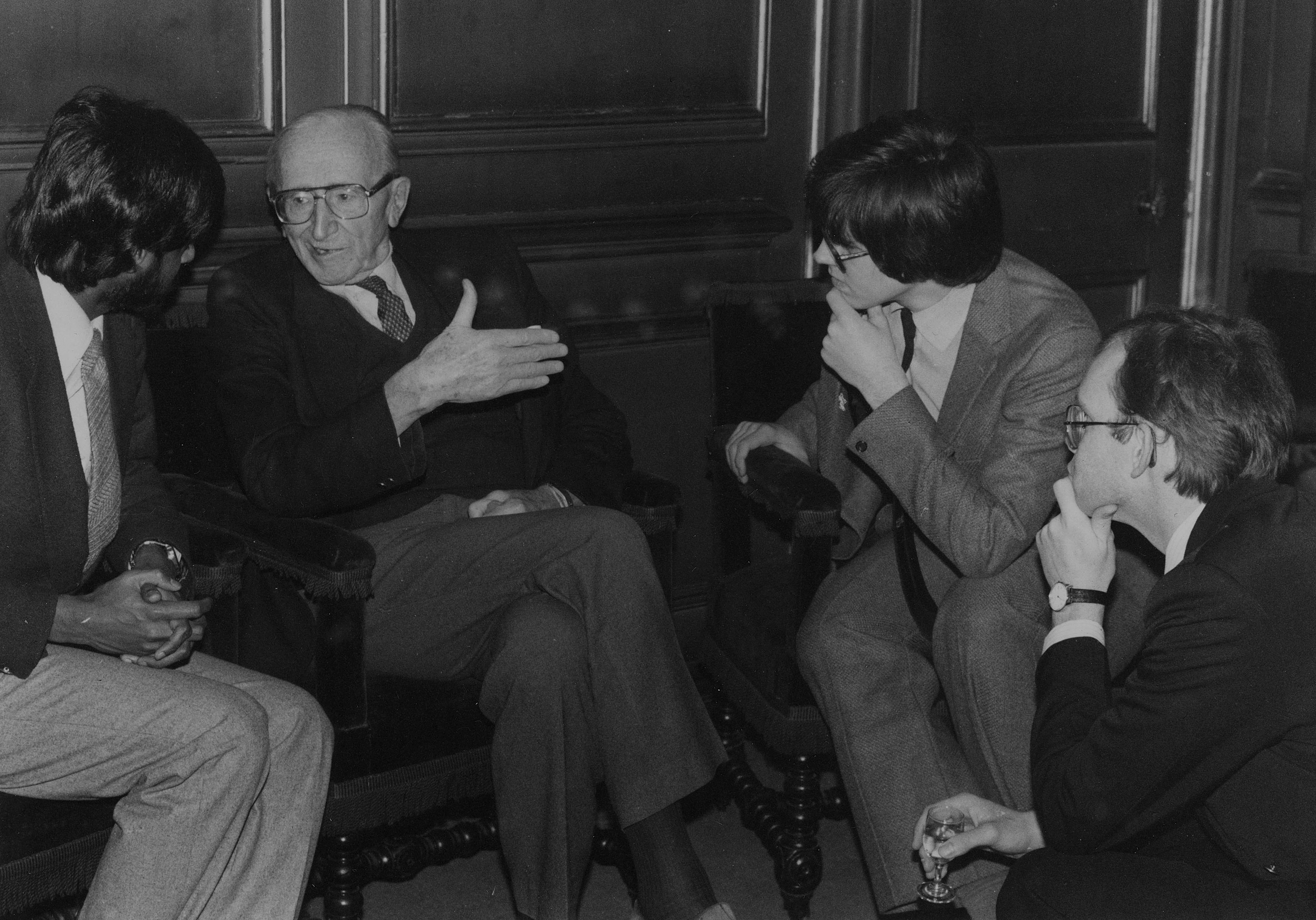
Hayek gives a talk on “The Muddle of the Middle” in Iceland 5 April 1980.

On 13 November in Vienna, Professor Gissurarson discusses the Mengerian roots of Hayek’s conservative liberalism. Both Menger and Hayek conceived of the economy as a process rather than an equilibrium, and this process takes place in time and is subject to risk and uncertainty. Menger regarded the main task of the social sciences to try and explain how social phenomena such as the law, money, language and the market could arise out of human activities without being designed by any one human being. Hayek agrees, but his real question is how the productive and rich civilisation of the West could arise despite the inevitable ignorance of one and every human being. His answer, briefly, was that in a free economy people could utilise the knowledge of each other and in the process also create new knowledge, by trial and error. Hayek visited Iceland in 1980, gave two lectures and made quite an impact.

On 15 November in Poitiers, Gissurarson discusses the 1941 publication in Iceland of Jan Valtin’s controversial book, Out of the Night. One-half of the book was published then, by the social democratic book club. The Icelandic communists conducted a fierce campaign against the book in which Valtin—whose real name was Richard Krebs—described his work as a Comintern agent, especially in the early 1930s. Stalinist author Halldor Laxness (later a Nobel Prize winner) and economist Benjamin Eiriksson, a renegade communist and veteran of the Comintern training camps in Moscow, hotly debated the book, and Gissurarson—who wrote the biographies in Icelandic of both men—reveals a dark secret about Stalinist persecution that they both knew, and almost nobody else. The Icelandic communists managed to stop the publication of the second part of Valtin’s book by the social democratic book, club. Instead, some anti-communists published it in 1944. The Icelandic book club reprinted the book in 2015 with a foreword and notes by Professor Gissurarson. Recent research has shown that many of the statements made by Valtin and dismissed as pure fiction indeed had a factual basis, such as his revelation that Icelandic seamen acted as secret couriers for the Comintern.

Professor Gissurarson’s participation in the two former conferences forms a part of the joint project by RNH and ACRE, the Alliance of Conservatives and Reformists in Europe, on ‘Bluegreen Capitalism’, whereas his participation in the third conferences forms a part in another joint project of RNH and ACRE on ‘Europe of the Victims’.

Comments Off