Gissurarson: The Conservative-Liberal Tradition

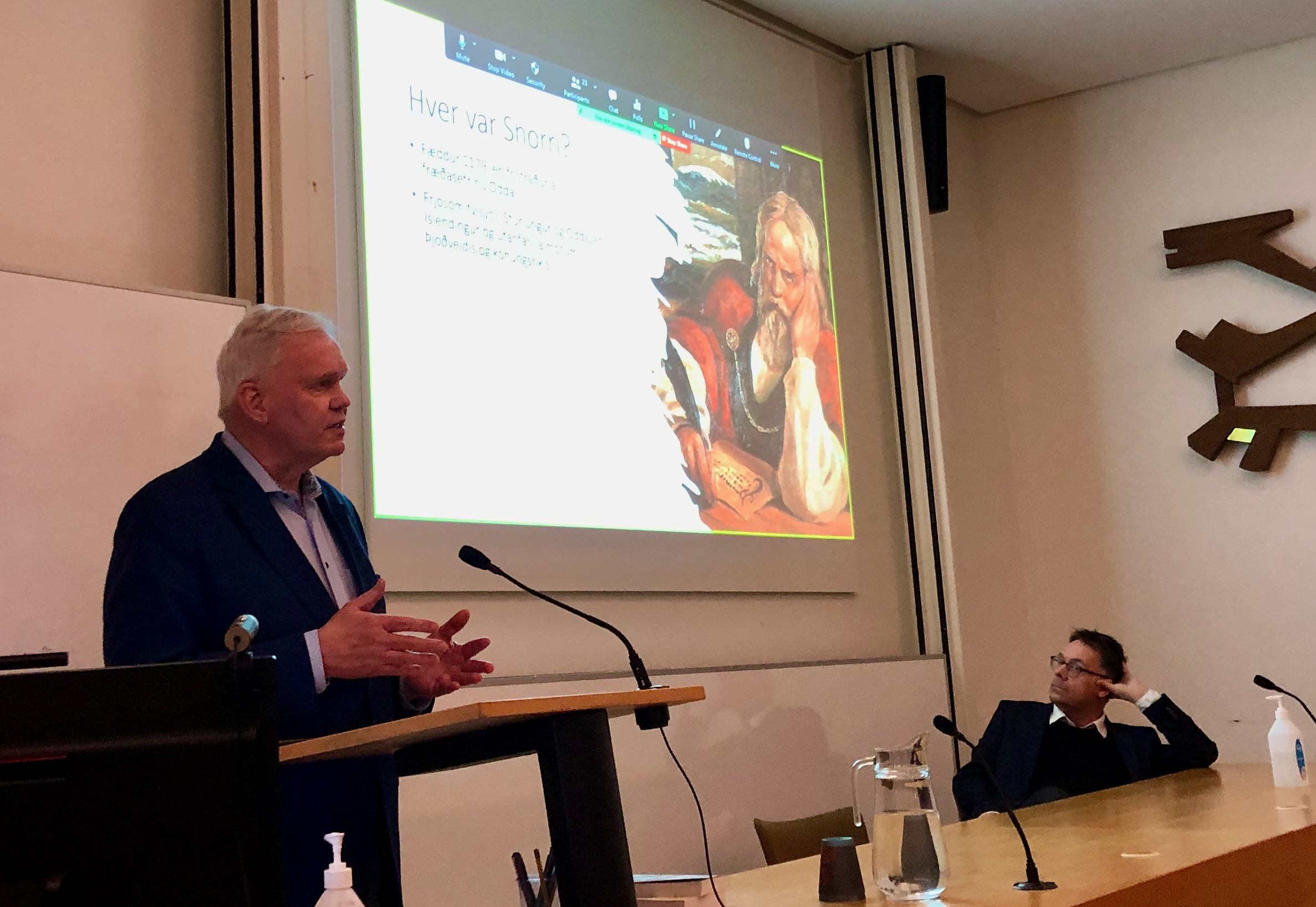
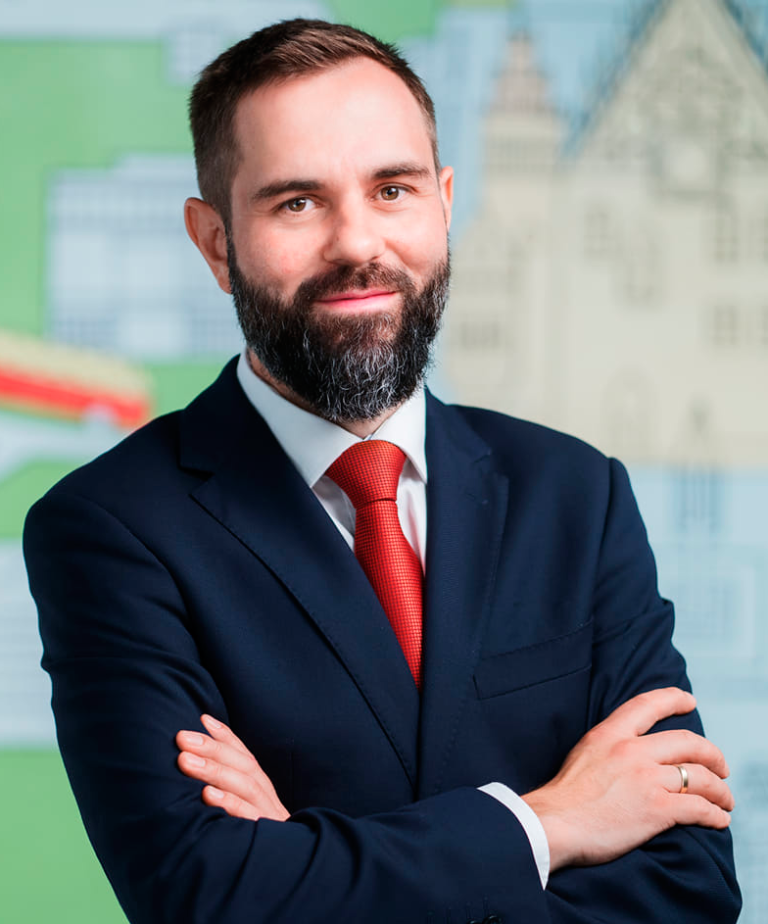
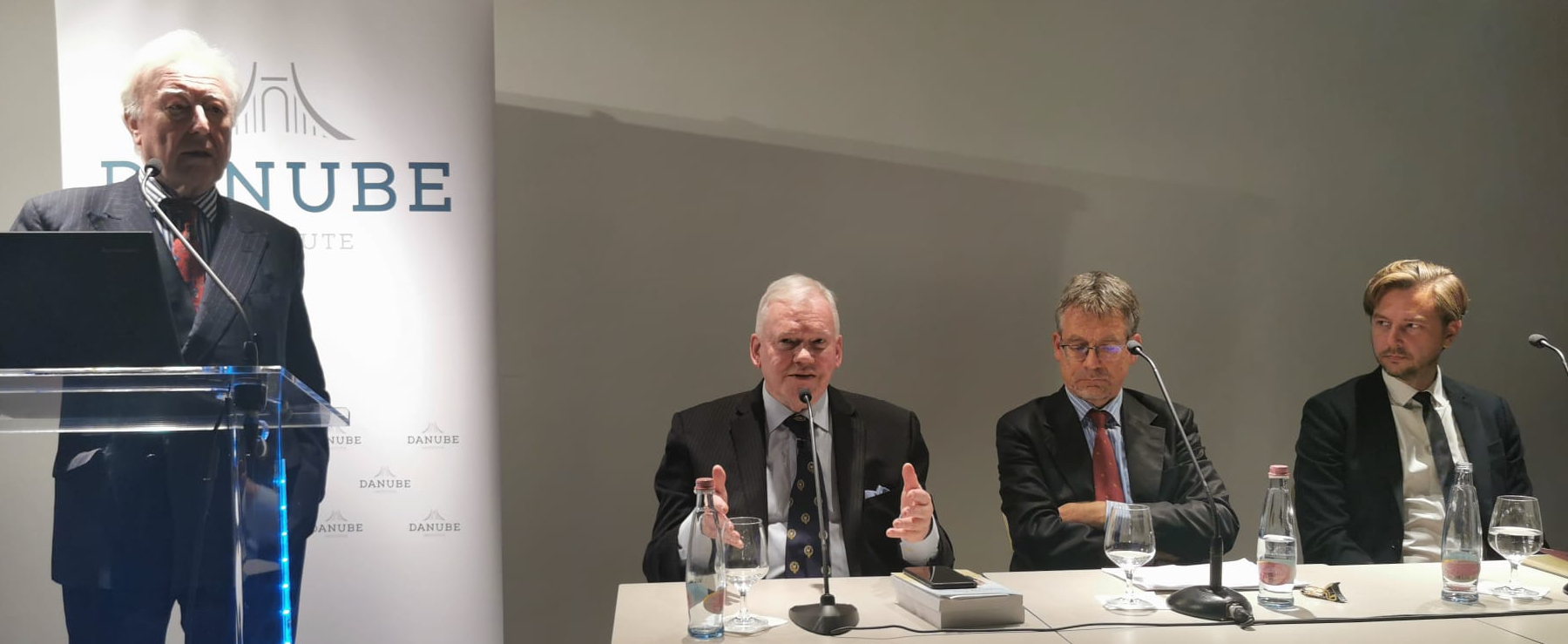
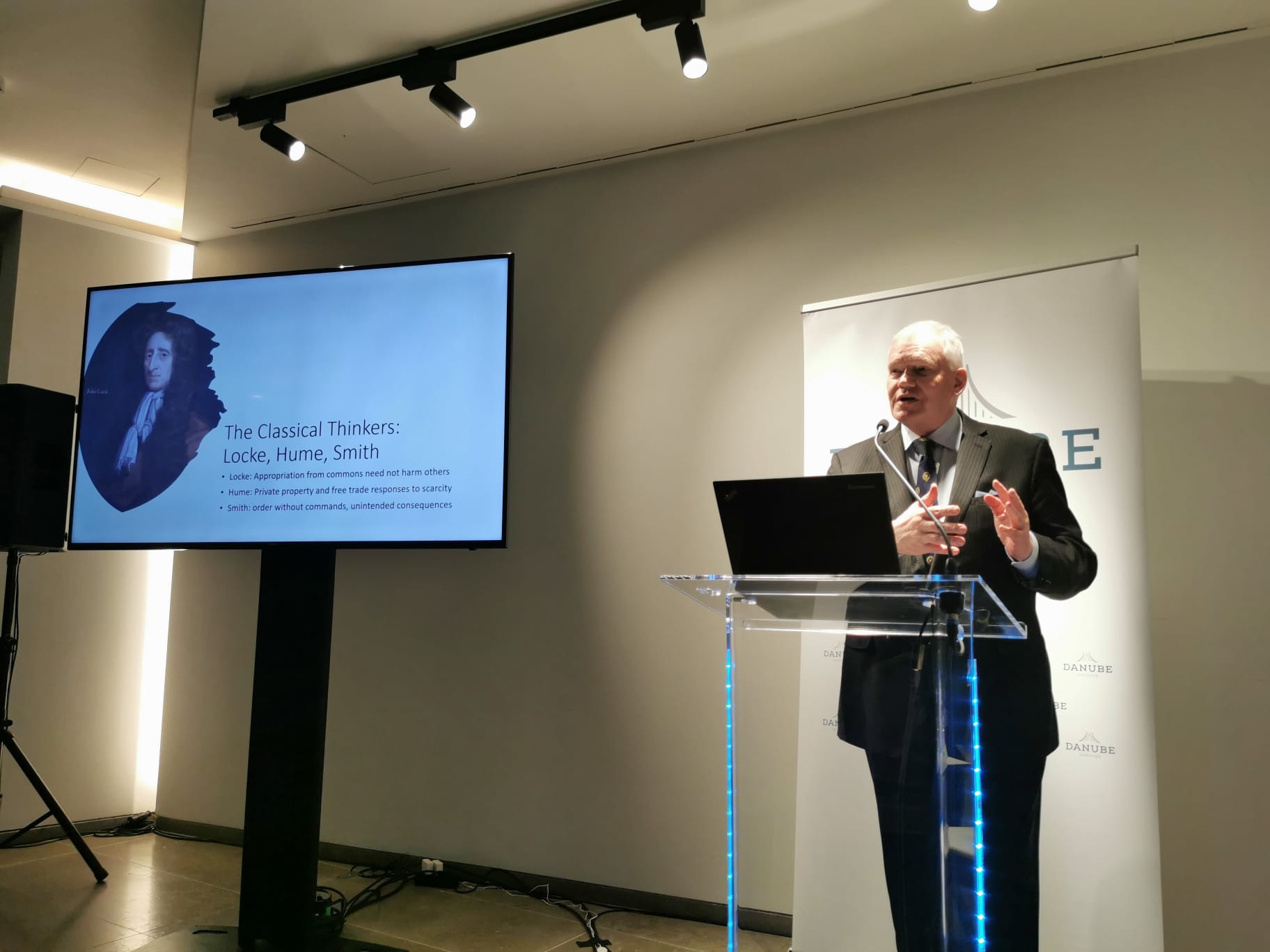
Modern conservatives and classical liberals, and most libertarians as well, are members of the same political tradition of the West, Professor Hannes H. Gissurarson argued at the Summer University of New Direction and Fundación Civismo in El Escorial near Madrid 14–19 June 2021. In two talks, on 14 and 18 June, Gissurarson discussed themes from his recent book in two volumes published by New Direction on twenty-four conservative-liberal thinkers, from Snorri Sturluson to Robert Nozick. Gissurarson pointed out that the ideas of government by consent and the right to rebellion were present in both the medieval thinkers he included in the book, Sturluson and St. Thomas Aquinas, although it was John Locke who presented the first systematic political theory in this tradition.

According to Gissurarson, conservative liberals supported the 1688 British Revolution and the 1776 American Revolution because they were made in order to preserve and extend existing liberties, whereas they opposed the 1789 French Revolution (as it evolved) and the 1917 Russian Revolution because they were made in order to reconstruct the whole of society by a small group of fanatics and to impose the values held by this group on the rest. The four leading principles of conservative liberalism were private property, free trade, limited government, and respect for traditions. Gissurarson said that in his opinion Friedrich A. von Hayek had offered perhaps the best synthesis of conservative insights and classical liberal principles with his theory of inevitable individual ignorance which could only be overcome by the discovery process of a free society.

Comments Off

New Book Discussed on Television and Radio

F. A. von Hayek

On 7 April 2021, RNH Academic Director Professor Hannes H. Gissurarson was interviewed on television and radio on the occasion of his new book of 884 pages in two volumes, Twenty-Four Conservative-Liberal Thinkers, published in Brussels at the end of 2020 by the think tank New Direction. In Thjodmal, a television programme for subscribers to Morgunbladid, Gissurarson said to journalist Andres Magnusson that of the twenty-four thinkers in his new book he personally regarded Friedrich A. von Hayek as the most profound. He had reinforced the arguments for two seminal, yet little-understood ideas from Adam Smith: that one man’s profit did not necessarily mean another man’s loss; and that order could develop without anyone doing any ordering. Hayek had also strengthened the argument of Ludwig von Mises for the unfeasibility of socialism, pointing out that the dispersal of knowledge required the dispersal of power. Gissurarson added that an important message of his book was that the free market was a necessary and not a sufficient condition for a free society: what was indispensable was a moral foundation, respect for ancient traditions and virtues.

Snorri Sturluson

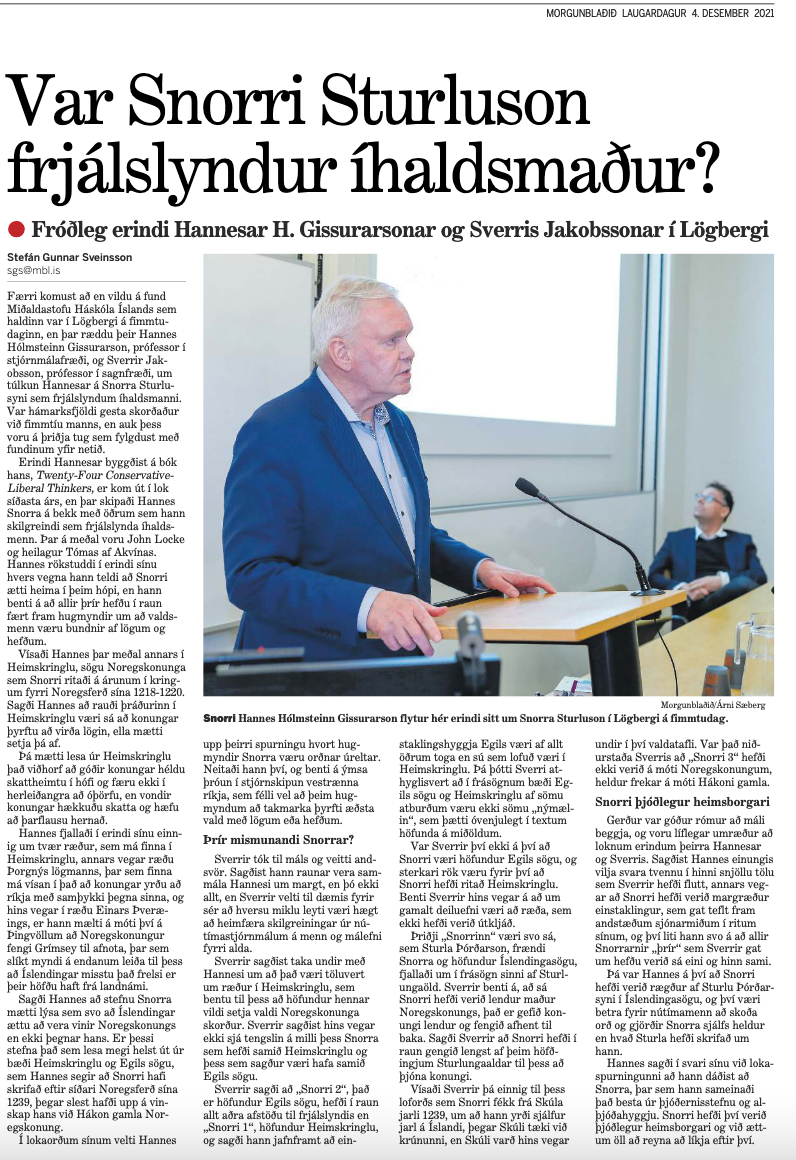
In The Mirror, a news-related radio programme of the government-owned National Broadcasting Service, Gissurarson explained to reporter Bogi Agustsson why he included Icelandic chronicler Snorri Sturluson in his book. Snorri had presented two medieval ideas which John Locke had developed further in his defence of the 1688 Glorious Revolution: that kings were subject to the same law as others and that they could be dethroned if they violated their unwritten contract with the people. In Heimskringla, Snorri described the conflict between the ancient law based on fellowship, Genossenschaft, and the modern law based on lordship, Herrschaft: this was essentially the contrast between law by common consent and royal decrees. In a famous speech by Einar from Thvera Snorri had in fact been expressing his own view that the Icelanders should be the king’s friends, not his subjects. Gissurarson noted that Snorri was also the author of a saga about poet-warrior Egil Skallagrimsson who had plausibly been called the first individual in a modern sense, having a rich emotional life, and asserting himself in a feud with the Norwegian royal family. One reason why the celebrated Icelandic sagas were written down, or perhaps composed, was that the Icelanders may have felt the need to redefine their identity as the Norwegian kings were trying to subdue them and to turn Iceland into a tributary. Gissurarson said that the evaluation of Snorri had to some extent been negatively influenced by his cousin, historian Sturla Thordson, a committed royalist.

In the Market, the televised business programme of Frettabladid, Gissurarson agreed with economic journalist Thordur Gunnarsson that a left-wing wave might be rising among young people. But this was a common tendency of any new generation, he observed, with the exception of the 1980s and 1990s when socialists everywhere had been almost incapicitated by the abysmal failure of socialism in Russia and China, at the same time as Thatcher and Reagan, inspired by Hayek and Milton Friedman, had implemented ambitious and successful programmes of liberalisation. When challenged about Friedman’s controversial theory on the social responsibility of business, Gissurarson expressed his agreement with Friedman. Company managers should not use the profits they were earning for their shareholders to subsidise causes they themselves personally liked. Instead they should pay out full dividends and allow individual shareholders to allocate their own money as they pleased. But of course business had to operate within the limits of the law, including the unwritten law of customs, traditions, habits, manners, and precedents.

Comments Off

Newspaper Interviews on a New Book

Photo: Mbl./Eggert

The three largest newspapers in Iceland have all published interviews with Professor Hannes H. Gissurarson, RNH Academic Director, on the occasion of his new book, Twenty-Four Conservative-Liberal Thinkers, being published by the think tank New Direction in Brussels in two volumes at the end of 2020. In the online journal Visir on 27 March 2021, Gissurarson said that the distinction between avarice and enlightened self-interest was morally crucial, but that the magic of the market, demonstrated by Adam Smith, was to harness both sentiments for the common good. The publisher of his book was connected to the European conservative and reformist parties, but it should be recalled that many of the thinkers in the book had been politically active. Snorri Sturluson served as Iceland’s Lawspeaker for a long period; Edmund Burke was a member of the British House of Commons; Benjamin Constant, Frédéric Bastiat and Alexis de Tocqueville were all members of the French legislative assembly, and Tocqueville served for a while as Foreign Minister; Lord Acton was an adviser to Gladstone; Carl Menger was a member of the Upper Chamber of the Austrian Parliament; Wilhelm Röpke was an adviser to Adenauer and Erhard; and both Friedrich von Hayek and Milton Friedman were advisers to Thatcher and Reagan. Other thinkers had however preferred the tranquillity of monasteries or universities, trying to understand rather than to change the world. Gissurarson categorically rejected the common assertion that the 2007–9 financial crisis had sounded the death knell for conservative liberalism or ‘neoliberalism’. Indeed, Hayek’s interpretation of economic crises, that they were usually caused by a prior monetary expansion, seemed appropriate in this case; and the worldwide response to the crisis was to provide banks with liquidity, whereas Friedman’s main criticism of the United States Federal Reserve Board during the Great Depression had been its failure to do so.

In Frettabladid on 30 March, Gissurarson defined a conservative liberal as someone who wanted to conserve liberty as the hard-won product of Western civilisation while recognising that in principle it could be extended to and enjoyed by all. He mentioned that he had been personally acquainted with five of the thinkers in the book, Hayek, Karl R. Popper, Friedman, James M. Buchanan and Robert Nozick. They had all been impressive personalities. In particular, Friedman had been witty and lively. Gissurarson added that he felt Snorri Sturluson and St. Thomas Aquinas both belonged in this group, even if conservative liberalism as a political position really only began to emerge with the Glorious Revolution of 1688 in the United Kingdom. Both Snorri and Aquinas had advocated limited government, the former with reference to the old German tradition of consent, the latter by applying the concept of natural law.

In Morgunbladid on 31 March, Gissurarson recalled that he had thirty-five years earlier written his doctoral dissertation at Oxford on Hayek’s conservative liberalism. He had since then modified his views in two ways. First, he was now more sympathetic than some thinkers in the liberal tradition to the idea of nationality, the respect for one’s cultural heritage and the will of a nation to build her own state, as did the Norwegians in 1905, the Finns in 1917 and the Icelanders and the three Baltic nations in 1918. Secondly, he felt even stronger than before that political reforms should facilitate the mutual adjustments of individuals, instead of imposing upon them designs from above. Conservative liberals wanted evolution, not revolution. Gissurarson said that conservative liberalism did not depend on a utilitarian calculus. Man was a choosing agent, not a maximising machine, and there was more to life than material goods. A competitive economy was necessary, but not sufficient. What was also required was honesty, hard work, thriftiness, prudence, civility, punctuality and other traditional virtues. Life had to provide continuity and some predictability, at the same time as it should produce challenges and reward creativity. Thus, within the conservative-liberal tradition there was a fruitful tension between tradition and innovation. Gissurarson stressed that mankind had never had it so good as today, because of freedom, but that hopefully modern man would not only come to appreciate it if he, or she, lost it.

Comments Off

Gissurarson meets with Iceland’s President

RNH Academic Director, Professor Hannes H. Gissurarson, met with the President of Iceland, Dr. Gudni Th. Johannesson, at his residence, Bessastadir, on 30 March 2021 and gave him a copy of his recent 884 pages book, Twenty-Four Conservative-Liberal Thinkers, published by the Brussels think tank New Direction in two volumes. The book is also available free of charge online. Of the thinkers included two are Nordic, Snorri Sturluson and Anders Chydenius. Gissurarson was personally acquainted with five of the thinkers, Friedrich von Hayek, Karl R. Popper, Milton Friedman, James M. Buchanan, and Robert Nozick. Afterwards, Gissurarson and the President had a long chat on history. Before he was elected President, Dr. Johannesson, a professional historian, participated in some RNH events: for example, he chaired a lecture given in 2012 by Professor Bent Jensen on Nordic communism, and he read a paper on new evidence on the 2008 bank collapse at a seminar in 2015.

Comments Off

Gissurarson Columnist in The Conservative

Since November 2020, RNH Academic Director Professor Hannes H. Gissurarson has been a columnist for the online magazine The Conservative, published by ECR, the European Conservatives and Reformists. At the end of 2020, he had written columns on various subjects, including the 2020 presidential elections in the United States and Trump’s record, Nozick’s critique of utilitarianism, Buchanan’s analysis of elections and the folly of the Common Fisheries Policy of the EU, the CPF. He had also protested against the misleading impression of Margaret Thatcher given in the popular Netflix series The Crown and recalled Winston Churchill’s historic visit to Iceland in 1941.

Comments Off

Gissurarson’s Book Published in Two Volumes

The think tank New Direction in Brussels has published a book in two volumes by Professor Hannes H. Gissurarson on Twenty-Four Conservative-Liberal Thinkers, both online (available free of charge) and on paper.

The first volume contains chapters on Snorri Sturluson, St. Thomas Aquinas, John Locke, David Hume, Adam Smith, Edmund Burke, Anders Chydenius, Benjamin Constant, Frédéric Bastiat, Alexis de Tocqueville, Herbert Spencer and Lord Acton. Gissurarson argues that even if classical liberalism in the modern sense may be traced to Locke’s defence of the 1688 ‘Glorious Revolution’, the two medieval thinkers he discusses, Snorri and Aquinas, supported government by consent and the right to rebellion. It was however in response to the 1789 French revolution that conservative liberalism came into being, not least as articulated by Burke, Constant, and Tocqueville. The 1688 revolution was made to preserve, protect and extend traditional liberties whereas the revolutionaries of 1789 sought to reconstruct the whole of society on their principles.

Hayek in Oxford with Chandran Kukathas, Andrew Melnyk and the author. Photo: Marie Gray.

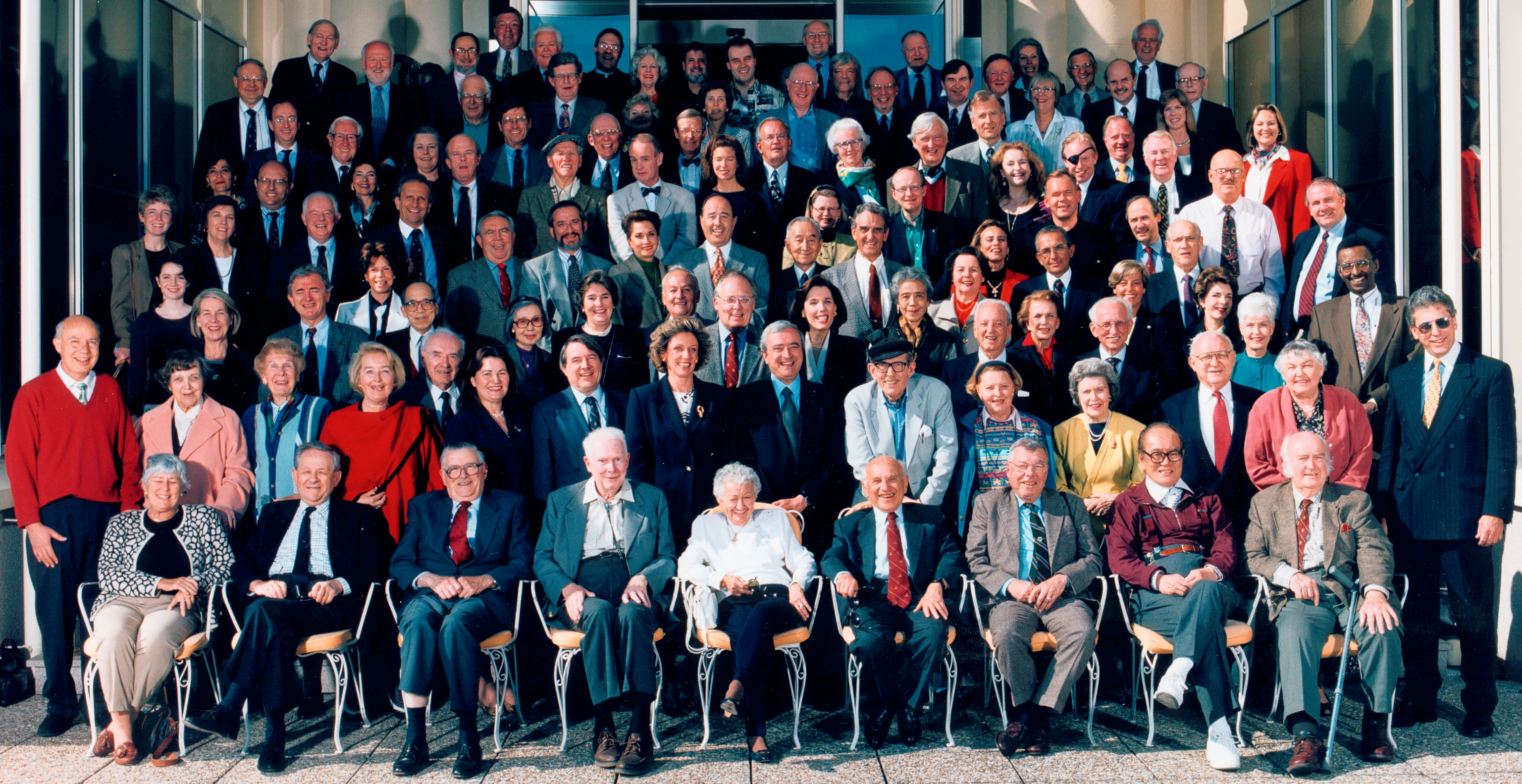
The second volume contains chapters on Carl Menger, William Graham Sumner, Ludwig von Mises, Friedrich A. von Hayek, Wilhelm Röpke, Michael Oakeshott, Sir Karl R. Popper, Bertrand de Jouvenel, Ayn Rand, Milton Friedman, James M. Buchanan, and Robert Nozick. Gissurarson grounds conservative liberalism in the concept of spontaneous coordination, as described by Smith, Menger and Hayek, from which flows on the one hand strong support for free trade and limited government and on the other hand respect for traditions, such as property, family and conventional morality. The author provides personal recollections of five thinkers, Hayek, Popper, Friedman, Buchanan and Nozick. Members of the Mont Pelerin Society figure prominent in the book which is 884 pages and carries many illustrations, paintings, photos and graphs. Some of the photos are from past meetings of the Mont Pelerin Society.

Comments Off