Platform: Kamiński Re-elected President

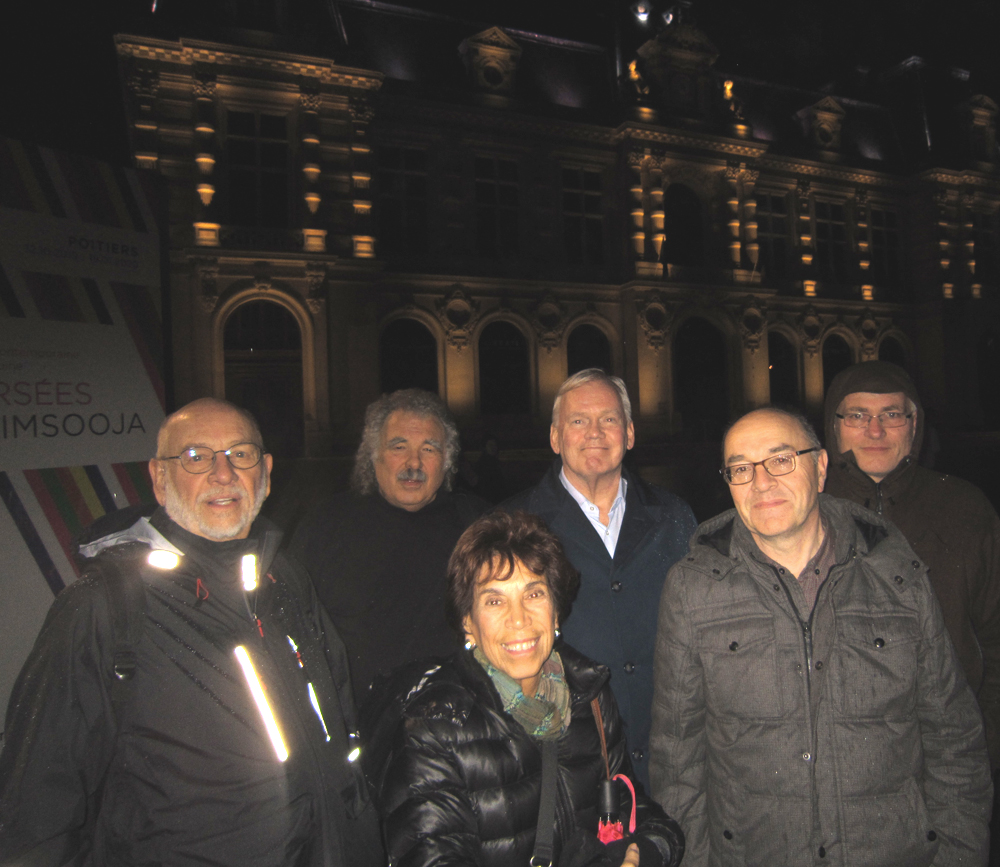
Polish historian Dr.  Łukasz Kamiński was re-elected President of the Platform of European Memory and Conscience at its annual meeting 3–6 November 2019, at the Tirana International Hotel in Tirana, the capital of Albania. RNH is a member of the Platform whose goal it is to keep alive the memory of the victims of totalitarianism, Nazism and communism, by organising conferences and seminars, by publishing relevant works and by other activities. Recently the European Parliament passed a resolution in support of the Platform. Professor Hannes H. Gissurarson attended the meeting on behalf of RNH, and the annual meeting was efficiently organised by Dr. Jonila Godole, Director of the IDMC, Institute of Democracy, Media and Culture in Albania.

Monday 4 November, an excursion was made to the town of Shkodra near the borders with Montenegro. This was the centre of the opposition to the communist terror of 1944–1991. Enver Hoxha’s totalitarian regime went so far as to stipulate atheism in its constitution and to destroy all mosques and churches by dynamite or to transform them into cinemas, gyms or warehouses. In Shkodra an exhibition on ‘Totalitarianism in Europe’ was opened, while leading members of the Platform gave interviews to the media. In the afternoon, there was a lunch of reflection at the famous restaurant Mrizi i Zanave near the village of Fishta.

Tuesday 5 November, the Council of Members had its meeting, discussing the annual report for 2018 and planned activities in 2019 and 2020. The statutes were changed somewhat in order to facilitate the Platform’s activities and the number of governing board members was increased from five to seven. In the afternoon, a round-table discussion took place about memory politics in Albania and Europe, after which the ‘House of Leaves’ was visited. This was originally a maternity ward, but in the War Gestapo was based there. After the 1944 communist takeover, it became the headquarters of the communist secret service, and now it is a museum about communist terror, with surveillance equipment, hidden cameras and tools of torture. Around 34 thousand people were imprisoned in Albania under the communists, and around six thousand lost their lives because of them. In the evening, attendees had dinner at the restaurant Millennium Gourmet Restaurant.

Wednesday 6 November, a seminar took place about the cooperation of the Konrad Adenauer Stiftung and institutes promoting democracy in Albania, in particular the IDMC. Then, some leading members of the Platform, including Professor Gissurarson, had a meeting with the Committee of Foreign Affairs in the Albanian Parliament. In a lively discussion on the reckoning with totalitarianism, Ralf Gjona, Vice-Chairman of the Committee, gave a spirited talk. RNH participation in the activities of the Platform form a part in its joint project with ACRE, the Alliance of Conservatives and Reformists in Europe, on ‘Europe of the Victims’.

Comments Off

European Parliament Endorses Platform

RNH is a member of the Platform of European Memory and Conscience which seeks to keep alive the memory of the victims of totalitarianism, communism and Nazism. RNH Academic Director Professor Hannes H. Gissurarson has given lectures at Platform conferences and contributed to its publications. On 19 September 2019, the European Parliament adopted a resolution about the importance of European remembrance for the future of Europe, urging the European Commission to support the Platform. In the resolution, the European Parliament emphasised the annual Day of Memory for the Victims of Totalitarianism, 23 August. It was on this very day in 1939 that Hitler and Stalin made their Non-Aggression Pact, signed in Moscow and dividing up most of Europe between them and starting the Second World War.

Annual meeting of the Platform in Bled, Slovenía 2018. RNH Academic Director is 8th from left.

Comments Off

Hannan Supported Iceland in 2008

RNH was a sponsor of a conference organised by Students for Liberty Iceland in Kopavogur 6 September 2019. In an interview with Morgunbladid 12 September, the keynote speaker, ACRE General Secretary and Tory MEP Daniel Hannan, discussed the impending exit of Great Britain from the European Union, for which he had fought in the national referendum on the issue. He said that the EU was trying to keep Great Britain inside by offering unacceptable terms for an exit. “Just imagine if Iceland sought a free trade deal with the EU, but that the EU insisted on two conditions: that you had to cancel all your free trade deals with other countries because the EU would supervise them, and that from now on the EU would be in full control of Kopavogur,” Hannan commented, referring to the conflice over Northern Ireland. “I am however proud of being the first British politician who publicly supported Iceland in the Icesave dispute. I was always convinced that the depositors would be fully reimbursed, and I was upset at the British authorities for mistreating a loyal friend and ally by invoking the Anti-Terrorist Act,” Hannan also said.

Comments Off

The Gold Standard or Cryptocurrencies?

The Association of Libertarian High School Students organised a seminar on the most efficient monetary order Sunday 8 September 2019, with Professor Edward Stringham and finance expert Peter C. Earle, at Hlidarsmari 19 in Kopavogur. Both Stringham and Earle argued that in general government was not a desirable producer of money, as it often was tempted to overproduce it, with inflation as the inevitable consequence, distorting prices and impeding mutually beneficial market transactions. Earle compared the gold standard where money production depended on the gold supply of the producer (usually a central bank) and cryptocurrencies. The advantage of the gold standard was how stable it was, whereas cryptocurrencies had until recently been fluctuating, although they now seemed to be becoming stabler. He said that therefore he was reluctant to express a preference for one type of currency over the other.

The meeting was chaired by high school student Julius Viggo Olafsson. Stringham and Earle who both are associated with the American Institute of Economic Research were in Iceland for the Students for Liberty Iceland conference 6 September on the future of freedom. RNH sponsorship of these events forms a part of a joint project with ACRE, the Alliance of Conservatives and Reformists in Europe, on ‘Bluegreen Capitalism’.

Comments Off

Seminar on Frédéric Bastiat

Saturday 7 September 2019, in the afternoon, the American Institute of Economic Research held a seminar at Hlidarsmari 19 in Kopavogur. The speakers, Professor Edward Stringham and financial expert Brad DeVos, talked about the Institute and about French 19th century writer Frédéric Bastiat, an eloquent defender of free trade, as is demonstrated by his famous essays on ‘What is Seen and Unseen in Political Economy’ and ‘The Petition of the Candlemakers’. In the former essay, Bastiat points out the invisible consequences of trade restrictions, and in the latter one the candlemakers demand protection from another producer of light, the sun. At the meeting, the Icelandic Bastiat Society was founded, one of many such societies in the world, under the leadership of Magnus Orn Gunnarsson.

In the following discussion, Professor Hannes H. Gissurarson pointed out that the first Iceandic treatise on economics, Audfraedi (The Theory of Wealth) by Arnljotur Olafsson, published in 1880, had been written very much in Bastiat’s spirit, as the author himself acknowledged. Bastiat had many other disciples in the Nordic countries in the 19th century, including Swedish statesman Johan August Gripenstedt who had created the preconditions of Sweden’s wealth by extensive liberal reforms in 1856–1866. One of Bastiat’s works, The Law, has been published in Icelandic, and RNH is going to have it reprinted as soon as possible. The accessible introduction to economics by Henry Hazlitt, Economics in One Lesson, written under Bastiat’s influence, is also available in Icelandic.

Stringham and DeVos were in Iceland for the conference of Students for Liberty the day before. RNH’s support of the Icelandic Bastiat Society forms a parts of a joint project with ACRE, the Alliance of Conservatives and Reformists in Europe, on ‘Bluegreen Capitalism’.

Comments Off

Hannan: Close Ties Between Iceland and the UK

Daniel Hannan, Secretary-General of ACRE, the Alliance of Conservatives and Reformists in Europe, and leader of the UK Conservatives in the European Parliament, gave the keynote speech at a regional conference of Students for Liberty Iceland and the American Institute of Economic Research, on “The Future and Freedom”, in Kopavogur in the afternoon of 6 September 2019. Hannan said that Iceland and the United Kingdom were good friends and that he had often visited Iceland. These two nations should maintain their close ties. Turning to Europe, Hannan remarked that it was extraordinary to witness the attempts of some people to disregard the decision in the national referendum on EU membership. The fact was that the UK would be much better off outside than inside the EU. The arguments for international free trade were however persuasive. Hannan said that his support of Brexit was not least in order to increase free trade, although the British would of course continue to do business with the EU countries. He himself wished them well. It was the ordinary man who benefitted most from free trade, Hannan added, and indeed it was often opposed by special interest, seeking protection from competition.

David Oddsson, Prime Minister in 1991–2004, delivered some opening remarks. He recalled that Hannan had publicly protested when the British Labour government inexplicably had invoked an Anti-Terrorist Act against Iceland in the midst of the 2008 bank collapse. This had been a noble gesture indeed. Oddsson discussed how different generations seemed to have different worries. When he was Prime Minister in the 1990s, he had had countless warnings of an impending 2000 Problem, but there had been no problem. Then there had been a lot of talk about a chronic fatigue syndrome, and about workplace burnouts, and now about global warming, even global heating. Often the danger was exaggerated and the great worry not well-founded. Never had there been more prosperity and peace than at present, but the young generation must not forget that this did not come about without a struggle. The fight for freedom had to go on. Indeed, to use yet another fashionable term, freedom was being bullied and harassed every day. Turning to Europe, Oddsson pointed out that many of the reforms implemented by his government—such as reduction of public debt, tax cuts, privatisation, the strengthening of pension funds and development of the system of individual transferable quotas in the fisheries—had been quite independent of Iceland’s membership in the European Economic Area, EEA, although it has of course been an important step in the right direction to open up the Icelandic economy and to gain access to the European market.

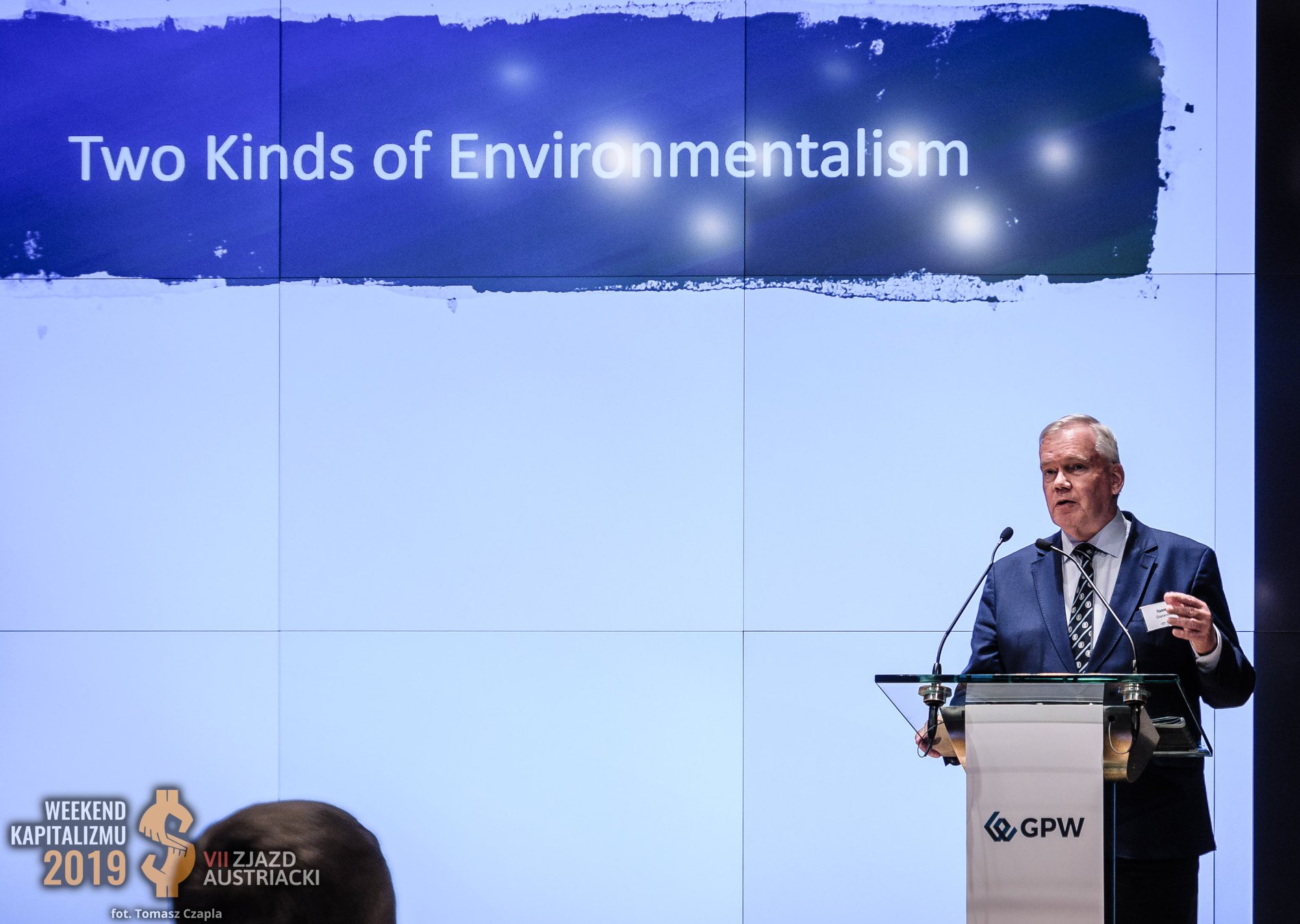
Professor Hannes H. Gissurarson described green capitalism. He distinguished between wise-use environmentalists (like himself) who wanted to utilise natural resources prudently and beneficially, and ecofundamentalists believing that nature had special rights against man. In fact the conflict was not between man and nature. It was between two groups of people who wanted to utilise resources in different ways. Consider wolves in the French Alps, Gissurarson said; they killed sheep. Which was to be preferred, the interests of those who wanted to preserve the wolves, or the interests of those who wanted to rear sheep in order to feed and clothe people? It was however not sufficient, Gissurarson added, to price resources. They had also to be transferred into private hands. Protection required protectors. By one stroke of a pen, for example, poachers threatening elephants and rhinos in Africa could be changed into gamekeepers—by allocating private property rights to the elephants and rhinos to their villages.

Gissurarson Slides at SFL 6 September 2019

Halla Sigrun Mathiesen chaired the conference. The other speakers were Mariam Gogoshvili from Georgia, Professor Edward Stringham, Peter C. Earle og Andrew Heaton. The Icelandic media paid much attention to the conference. The daily Morgunbladid printed a full report of it, the business magazine Vidskiptabladid published an article about Hannan and the online journal Viljinn interviewed Hannan. RNH participation formed a part of the joint project by RNH and ACRE, the Alliance of Conservatives and Reformists in Europe, on ‘Bluegreen Capitalism’.

Comments Off